ANOSMIA (Loss of Smell) – Complimentary remedies Kit

£30.00£82.00

Instock

Clear
Description

ANOSMIA (Loss of Smell)

Often temporary, but may become chronic or permanent depending on cause


Types of Smell Disorders

  • Anosmia – total loss
  • Hyposmia – partial loss
  • Parosmia – distorted smells (pleasant → foul)
  • Phantosmia – phantom smells (not present)


By Mechanism:

  • Conductive (Obstructive) – blockage (polyps, congestion)
  • Sensorineural – nerve/brain damage (viral, trauma)
  • Congenital – from birth
  • Unilateral – one nostril only


⚠️ Common Causes & Risk Factors (UK/EU Patterns)

🔴 MOST COMMON: Nasal & Viral Causes

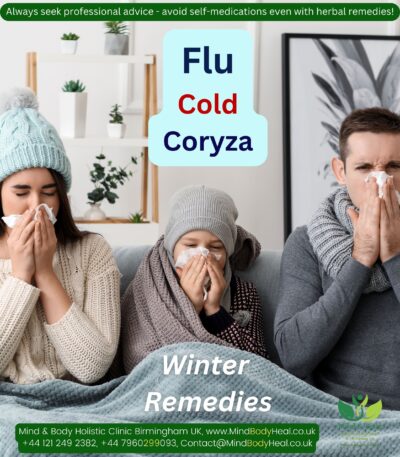
  • Common cold, flu
  • COVID-19 / post-viral anosmia
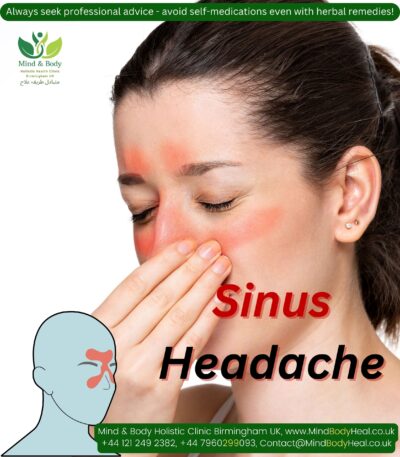
  • Sinusitis
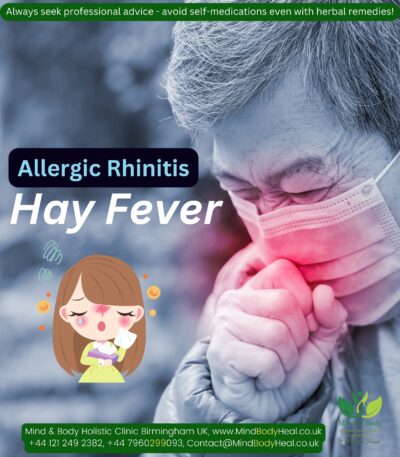
  • Allergic rhinitis (hay fever)
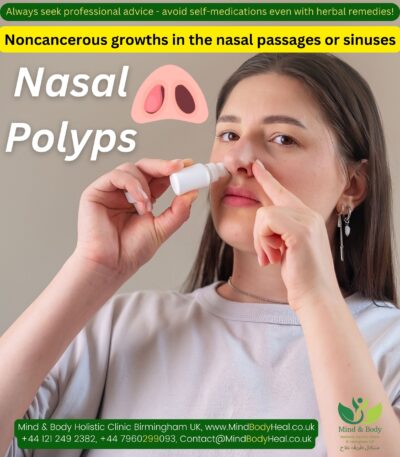
  • Nasal polyps

➡️ Cause: inflammation blocks smell receptors


🧠 Neurological Causes

  • Head injury
  • Parkinson’s disease
  • Alzheimer’s disease
  • Multiple sclerosis


🏗️ Structural Causes

  • Deviated septum
  • Tumours (rare)


⚙️ Metabolic / Lifestyle

  • Diabetes
  • Smoking / vaping
  • Nutrient deficiencies (Zinc, Vitamin A, B12)


💊 Drug / Toxin Related

  • Antibiotics, antihistamines, BP meds
  • Chemical exposure, pollution


🔥 Key Risk Factors

  • Age >50
  • Chronic sinus infections
  • Allergies
  • Urban pollution
  • Smoking


🚨 Common Symptoms

  • Loss or reduced smell
  • Food tastes bland (false “loss of taste”)
  • Reduced appetite
  • Weight loss or gain
  • Low mood / emotional impact


Complications (if untreated)

  • Nutritional deficiencies
  • Depression & reduced quality of life
  • Safety risks (gas leaks, fire, spoiled food)
  • Delayed diagnosis of serious disease
  • Possible permanent loss (especially nerve damage)


🧪 Diagnosis (UK Clinical Approach)

  • Clinical history + ENT exam
  • Nasal endoscopy (polyps/blockage)
  • Smell tests (Sniffin’ Sticks, UPSIT)
  • CT / MRI (if unclear cause)
  • Neurological assessment if needed


🌸 Aromatherapy (Clinical + Natural)

Same oils as smell training:

Rose, Lemon, Clove, Eucalyptus

👉 Reinforces neural recovery

👉 The most proven and essential treatment

🧘 Lifestyle Modifications

  • Stop smoking immediately ⭐
  • Improve air quality / humidify environment
  • Regular exercise (improves circulation)
  • Manage allergies early
  • Practice breathing exercises (pranayama)
  • Ensure good sleep
  • Start smell training early
  • Support Zinc + Vitamin A levels
  • Keep nasal passages clean & moist
  • Avoid overuse of chemical sprays
  • Install smoke & gas detectors


🌟 Final Key Insight

👉 Most mild cases recover naturally, but persistent loss (>4–6 weeks) requires proper evaluation and active treatment.

👉 Recovery is gradual — consistency is more important than intensity.


FREE Shipping included – Usually dispatched within 1 – 2 working days!

Are you concerned about your health or managing a recurring or chronic condition?

Our website provides informed guidance and initial supportive care for individuals who are finding it difficult to access their doctors or who have not experienced desired improvement with conventional options.

We help individuals explore a range of natural and holistic healing approaches to encourage balance and long-term wellness that may complement your healing journey.

We offer a ready-to-use complementary remedies kit designed to ease discomfort and support well-being, with clear instructions for each item.

The kit includes a personalised selection of remedies based on your signs, symptoms, and likely causative factors.

It may combine homeopathic medicines, herbal or daily supplements, a tailored diet plan, lifestyle guidance, practical tips, and topical applications where needed. It’s suitable if you value the healing potential of natural, holistic remedies.

Complementary remedies work best alongside standard medical treatments and can usually be taken safely with your regular medications.

Our homeopathic remedies follow Dr. Hahnemann’s traditional dilution and succussion methods and are prepared by a qualified naturopathic practitioner, supported by research, clinical experience, and observed outcomes in similar cases. Treatment duration can range from a few weeks to several months, depending on severity and chronicity. Outcomes vary with individual factors and case complexity.

If you prefer lactose pills instead of sucrose globules, let us know. Please also provide the patient’s age so we can supply appropriately sized pills. You can simply send this via WhatsApp at 07960 299 093.

These remedies may contain trace amounts of natural plant, mineral, or animal substances, preserved in medical-grade alcohol. Inform us of any allergies or dietary restrictions before purchase.

You may contact us before starting or book a detailed consultation (in person or via teleconsultation) with one of our experienced naturopath for your detailed assessment or personalized guidance.

Natural remedies can affect the body and may not suit everyone. At the start of treatment, some patients—especially with mental health or skin issues—may experience a temporary increase in symptoms. This may represent medicinal aggravation, indicating the body is responding, though symptoms may not be connected and simply coincidental. If they persist, contact us for support.

Why some patients choose natural, complementary or holistic remedies:
• Symptomatic relief and improved well-being
• Gentle options with fewer side effects
• Whole-person focus, addressing physical, emotional, and lifestyle factors
• Root-cause and preventive emphasis
• Encouragement of active self-care
• Support alongside conventional treatment
• Personalised and accessible care

Precautions:
• Inform your healthcare provider about any complementary therapies
• Some herbs or supplements may interact with conventional medications
• Do not replace conventional treatment for serious, chronic, or terminal conditions

These complementary remedy kits are provided for your own discretion and personal responsibility. Use them mindfully and avoid self-medicating in sensitive situations.

If you are looking for a specific remedy / kit not listed on our site or a customized formulation, contact us—our range is extensive and can be tailored to your physical and mental symptoms and causative factors.

Disclaimer:
Natural remedies—including homeopathic remedies, herbal supplements, and aromatherapy products—are generally safe for most people, including children and older adults. Still, consult your GP or healthcare provider before use, especially if pregnant, breastfeeding, or managing chronic or serious conditions.

  • Our remedies support general wellness and are not a substitute for medical advice.
  • Review product details and make informed decisions before purchasing, particularly for ongoing or serious concerns.
  • We provide general guidance only; detailed personalised consultations are not available through this platform.
  • These remedies are intended for individuals able to follow instructions independently.
  • Our support focuses on product use and general information; repeated or highly detailed personal queries may not receive individual responses.
  • If you need frequent reassurance or highly tailored advice, please consult a qualified naturopath or healthcare provider before purchasing.


Due to strict UK regulations on the sale of medicinal products, we cannot give specific advice, without a face-to-face consultation.

Additional information
Gender

Male, Female

Age Group

11 – 20 years old, 21 – 30 years old, 31 – 40 years old, 40 plus – around menopause

Peculiar symptoms 1

Loss or reduced smell, Food tastes bland (false “loss of taste”), Reduced appetite, Weight loss or gain, Low mood / emotional impact, Difficulty detecting odours (e.g. smoke, gas, spoiled food), Reduced enjoyment of food and drinks, Altered flavour perception (flavours seem muted or distorted), Increased use of salt, sugar, or spices, Loss of interest in eating, Changes in eating habits, Nutritional deficiencies over time, Social withdrawal (reduced enjoyment of shared meals), Anxiety or safety concerns (e.g. unable to smell hazards), Memory and emotional blunting linked to scent loss, Nasal congestion or blockage (if underlying cause present), Headache or sinus pressure (in sinus-related cases), Dry nose or irritation, Distorted smell perception (parosmia), Phantom smells (phantosmia)

Peculiar Symptoms 2

Loss or reduced smell, Food tastes bland (false “loss of taste”), Reduced appetite, Weight loss or gain, Low mood / emotional impact, Difficulty detecting odours (e.g. smoke, gas, spoiled food), Reduced enjoyment of food and drinks, Altered flavour perception (flavours seem muted or distorted), Increased use of salt, sugar, or spices, Loss of interest in eating, Changes in eating habits, Nutritional deficiencies over time, Social withdrawal (reduced enjoyment of shared meals), Anxiety or safety concerns (e.g. unable to smell hazards), Memory and emotional blunting linked to scent loss, Nasal congestion or blockage (if underlying cause present), Headache or sinus pressure (in sinus-related cases), Dry nose or irritation, Distorted smell perception (parosmia), Phantom smells (phantosmia)

Peculiar symptoms 3

Loss or reduced smell, Food tastes bland (false “loss of taste”), Reduced appetite, Weight loss or gain, Low mood / emotional impact, Difficulty detecting odours (e.g. smoke, gas, spoiled food), Reduced enjoyment of food and drinks, Altered flavour perception (flavours seem muted or distorted), Increased use of salt, sugar, or spices, Loss of interest in eating, Changes in eating habits, Nutritional deficiencies over time, Social withdrawal (reduced enjoyment of shared meals), Anxiety or safety concerns (e.g. unable to smell hazards), Memory and emotional blunting linked to scent loss, Nasal congestion or blockage (if underlying cause present), Headache or sinus pressure (in sinus-related cases), Dry nose or irritation, Distorted smell perception (parosmia), Phantom smells (phantosmia)

Peculiar symptom 4

Loss or reduced smell, Food tastes bland (false “loss of taste”), Reduced appetite, Weight loss or gain, Low mood / emotional impact, Difficulty detecting odours (e.g. smoke, gas, spoiled food), Reduced enjoyment of food and drinks, Altered flavour perception (flavours seem muted or distorted), Increased use of salt, sugar, or spices, Loss of interest in eating, Changes in eating habits, Nutritional deficiencies over time, Social withdrawal (reduced enjoyment of shared meals), Anxiety or safety concerns (e.g. unable to smell hazards), Memory and emotional blunting linked to scent loss, Nasal congestion or blockage (if underlying cause present), Headache or sinus pressure (in sinus-related cases), Dry nose or irritation, Distorted smell perception (parosmia), Phantom smells (phantosmia)

Probable cause 1

Common cold, Flu (influenza), COVID-19 / post-viral anosmia, Sinusitis, Allergic rhinitis (hay fever), Nasal polyps, Upper respiratory tract infections, Chronic rhinosinusitis, Nasal congestion/blockage, Head injury / trauma, Parkinson’s disease, Alzheimer’s disease, Multiple sclerosis, Brain tumours (olfactory region), Stroke, Epilepsy (temporal lobe), Deviated septum, Nasal tumours (benign or malignant), Congenital absence of olfactory nerves, Skull base abnormalities, Enlarged adenoids, Diabetes, Smoking, Vaping, Alcohol excess, Nutrient deficiencies (Zinc, Vitamin A, Vitamin B12), Hormonal imbalances (e.g. thyroid disorders), Use of Antibiotics, Antihistamines, Blood pressure medications, Antidepressants, Chemotherapy drugs, Nasal decongestant overuse, Chemical exposure (solvents, pesticides), Air pollution, Age >50, Chronic sinus infections, Allergies, Recurrent colds/viral infections, Urban pollution exposure, Smoking, Occupational chemical exposure, Poor nutrition

Probable cause 2

Common cold, Flu (influenza), COVID-19 / post-viral anosmia, Sinusitis, Allergic rhinitis (hay fever), Nasal polyps, Upper respiratory tract infections, Chronic rhinosinusitis, Nasal congestion/blockage, Head injury / trauma, Parkinson’s disease, Alzheimer’s disease, Multiple sclerosis, Brain tumours (olfactory region), Stroke, Epilepsy (temporal lobe), Deviated septum, Nasal tumours (benign or malignant), Congenital absence of olfactory nerves, Skull base abnormalities, Enlarged adenoids, Diabetes, Smoking, Vaping, Alcohol excess, Nutrient deficiencies (Zinc, Vitamin A, Vitamin B12), Hormonal imbalances (e.g. thyroid disorders), Use of Antibiotics, Antihistamines, Blood pressure medications, Antidepressants, Chemotherapy drugs, Nasal decongestant overuse, Chemical exposure (solvents, pesticides), Air pollution, Age >50, Chronic sinus infections, Allergies, Recurrent colds/viral infections, Urban pollution exposure, Smoking, Occupational chemical exposure, Poor nutrition

Probable cause 3

Common cold, Flu (influenza), COVID-19 / post-viral anosmia, Sinusitis, Allergic rhinitis (hay fever), Nasal polyps, Upper respiratory tract infections, Chronic rhinosinusitis, Nasal congestion/blockage, Head injury / trauma, Parkinson’s disease, Alzheimer’s disease, Multiple sclerosis, Brain tumours (olfactory region), Stroke, Epilepsy (temporal lobe), Deviated septum, Nasal tumours (benign or malignant), Congenital absence of olfactory nerves, Skull base abnormalities, Enlarged adenoids, Diabetes, Smoking, Vaping, Alcohol excess, Nutrient deficiencies (Zinc, Vitamin A, Vitamin B12), Hormonal imbalances (e.g. thyroid disorders), Use of Antibiotics, Antihistamines, Blood pressure medications, Antidepressants, Chemotherapy drugs, Nasal decongestant overuse, Chemical exposure (solvents, pesticides), Air pollution, Age >50, Chronic sinus infections, Allergies, Recurrent colds/viral infections, Urban pollution exposure, Smoking, Occupational chemical exposure, Poor nutrition

Probable cause 4

Common cold, Flu (influenza), COVID-19 / post-viral anosmia, Sinusitis, Allergic rhinitis (hay fever), Nasal polyps, Upper respiratory tract infections, Chronic rhinosinusitis, Nasal congestion/blockage, Head injury / trauma, Parkinson’s disease, Alzheimer’s disease, Multiple sclerosis, Brain tumours (olfactory region), Stroke, Epilepsy (temporal lobe), Deviated septum, Nasal tumours (benign or malignant), Congenital absence of olfactory nerves, Skull base abnormalities, Enlarged adenoids, Diabetes, Smoking, Vaping, Alcohol excess, Nutrient deficiencies (Zinc, Vitamin A, Vitamin B12), Hormonal imbalances (e.g. thyroid disorders), Use of Antibiotics, Antihistamines, Blood pressure medications, Antidepressants, Chemotherapy drugs, Nasal decongestant overuse, Chemical exposure (solvents, pesticides), Air pollution, Age >50, Chronic sinus infections, Allergies, Recurrent colds/viral infections, Urban pollution exposure, Smoking, Occupational chemical exposure, Poor nutrition

Quantity

One month supply, Two months supply, Three months supply