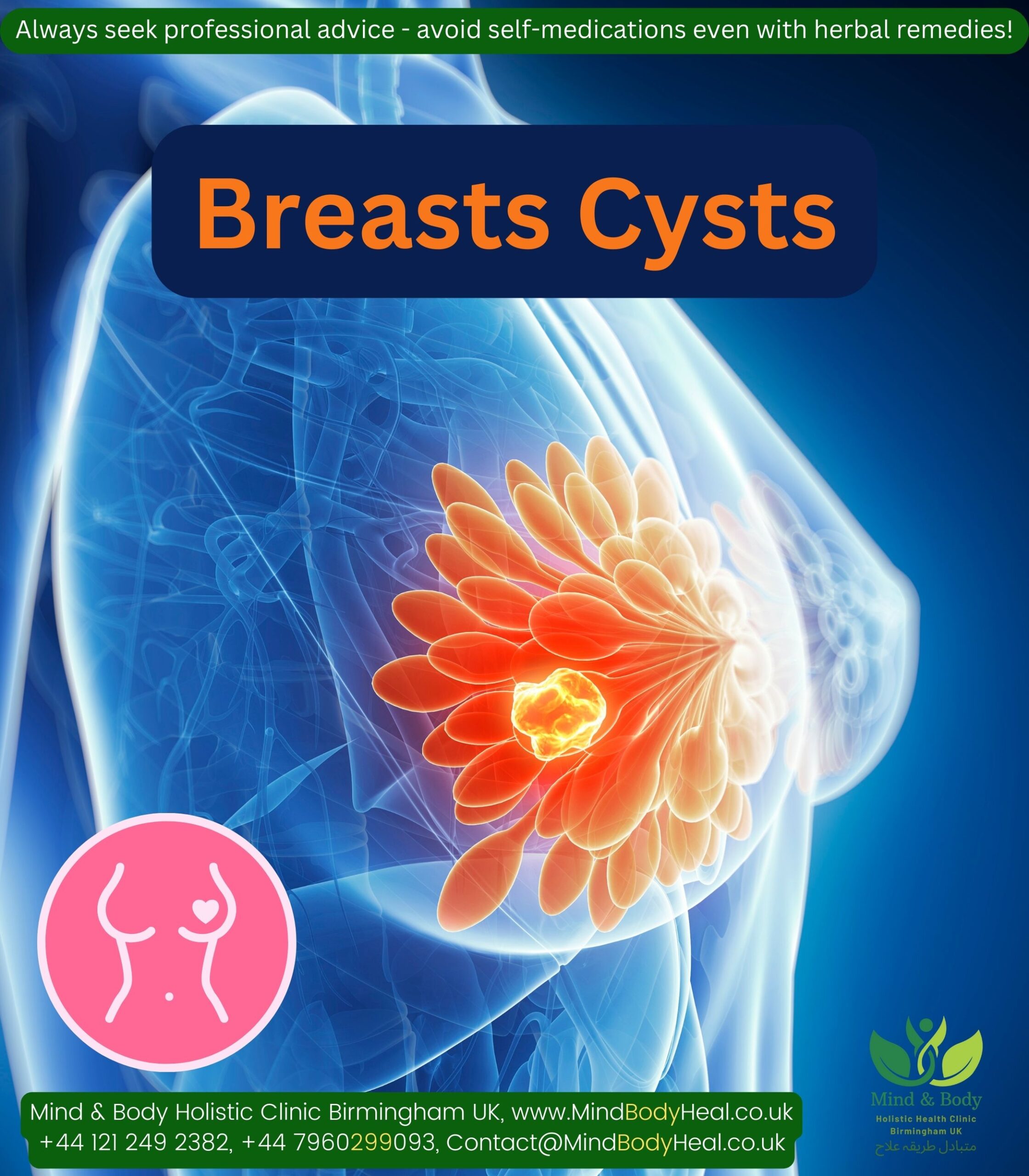
Each of your breasts contains lobes of glandular tissue.
The lobes are divided into smaller lobules that produce milk during pregnancy and breast-feeding.
The supporting tissue that gives the breast its shape is made up of fatty tissue and fibrous connective tissue.
Breast cysts are fluid-filled sacs, which are usually not cancerous (benign).
A breast cyst usually feels like a grape or a water-filled balloon, but sometimes a breast cyst feels firm.
Sometimes, you can feel them, especially if they become painful a few days before your menstrual cycle.
Breast cysts can also be microcysts or macrocystis.
- Most breast tissue contains microcysts, which are very tiny or small (like grain of rice or pea) to feel and may be seen by ultrasound or even just under a microscope.
- Macrocystis are larger (as a golf ball) and can often be felt – grow up to several inches — large enough and can put pressure on nearby breast tissue, causing breast pain or discomfort.
They’re often described as round or oval lumps with distinct edges.
You can have one or more and they can happen in one or both breasts.
Most breast cysts don’t usually require treatment unless a cyst is large and painful or uncomfortable.
Breast cysts don’t increase your risk of developing breast cancer or anything more serious.
You’re more likely to get breast cysts if you’re:
- Between 35 and 50 years old.
- Breast cysts are common in women before menopause, but they can also occur in postmenopausal women if they are taking hormone therapy.
- They don’t usually develop after menopause when oestrogen levels taper off.
- But they can be found in women of any age.
There are three types of breast cysts:
Simple breast cyst: Filled entirely with fluid (not solid) and are always noncancerous and make up about 90% of all breast cysts.
Complex breast cyst: which has a mix of fluid and solid components.
Complicated breast cyst: It is fluid-filled, but may have some cloudiness to the fluid, or the borders may be somewhat irregular.
Possible Causes of breasts cysts:
The exact cause of breast cysts is still unknown.
- It’s thought to be a part of the normal life cycle of a breast.
- Breast cysts develop as a result of fluid accumulation inside the glands in the breasts.
- They may develop because of hormonal changes from monthly menstruation.
- Excess oestrogen in your body, can stimulate the breast tissue, may also contribute to breast cysts.
What maybe the complications of this condition?
They can become infected, or can become large, tense and painful and require aspiration.
Signs and symptoms of a breast cyst include:
Some cysts are so small you can’t feel them. If you have a larger breast cyst, you may feel a lump that’s:
- Soft or firm, although most are soft.
- Round, oval and smooth with distinct edges.
- Painful or tender, especially before your menstrual cycle.
- Easily movable under your skin (especially large cysts).
- Nipple discharge that may be clear, yellow, straw coloured or dark brown with localised pain.
- Tenderness in the area of the breast lump.
- Increase in breast lump size and breast tenderness just before your period
- Decrease in breast lump size and resolution of other symptoms after your period
FREE Shipping included – Usually dispatched within 1 – 2 working days!
Are you concerned about your health or managing a recurring or chronic condition?
Our website provides informed guidance and initial supportive care for individuals who are finding it difficult to access their doctors or who have not experienced desired improvement with conventional options.
We help individuals explore a range of natural and holistic healing approaches to encourage balance and long-term wellness that may complement your healing journey.
We offer a ready-to-use complementary remedies kit designed to ease discomfort and support well-being, with clear instructions for each item.
The kit includes a personalised selection of remedies based on your signs, symptoms, and likely causative factors.
It may combine homeopathic medicines, herbal or daily supplements, a tailored diet plan, lifestyle guidance, practical tips, and topical applications where needed. It’s suitable if you value the healing potential of natural, holistic remedies.
Complementary remedies work best alongside standard medical treatments and can usually be taken safely with your regular medications.
Our homeopathic remedies follow Dr. Hahnemann’s traditional dilution and succussion methods and are prepared by a qualified naturopathic practitioner, supported by research, clinical experience, and observed outcomes in similar cases. Treatment duration can range from a few weeks to several months, depending on severity and chronicity. Outcomes vary with individual factors and case complexity.
If you prefer lactose pills instead of sucrose globules, let us know. Please also provide the patient’s age so we can supply appropriately sized pills. You can simply send this via WhatsApp at 07960 299 093.
These remedies may contain trace amounts of natural plant, mineral, or animal substances, preserved in medical-grade alcohol. Inform us of any allergies or dietary restrictions before purchase.
You may contact us before starting or book a detailed consultation (in person or via teleconsultation) with one of our experienced naturopath for your detailed assessment or personalized guidance.
Natural remedies can affect the body and may not suit everyone. At the start of treatment, some patients—especially with mental health or skin issues—may experience a temporary increase in symptoms. This may represent medicinal aggravation, indicating the body is responding, though symptoms may not be connected and simply coincidental. If they persist, contact us for support.
Why some patients choose natural, complementary or holistic remedies:
• Symptomatic relief and improved well-being
• Gentle options with fewer side effects
• Whole-person focus, addressing physical, emotional, and lifestyle factors
• Root-cause and preventive emphasis
• Encouragement of active self-care
• Support alongside conventional treatment
• Personalised and accessible care
Precautions:
• Inform your healthcare provider about any complementary therapies
• Some herbs or supplements may interact with conventional medications
• Do not replace conventional treatment for serious, chronic, or terminal conditions
These complementary remedy kits are provided for your own discretion and personal responsibility. Use them mindfully and avoid self-medicating in sensitive situations.
If you are looking for a specific remedy / kit not listed on our site or a customized formulation, contact us—our range is extensive and can be tailored to your physical and mental symptoms and causative factors.
Disclaimer:
Natural remedies—including homeopathic remedies, herbal supplements, and aromatherapy products—are generally safe for most people, including children and older adults. Still, consult your GP or healthcare provider before use, especially if pregnant, breastfeeding, or managing chronic or serious conditions.
- Our remedies support general wellness and are not a substitute for medical advice.
- Review product details and make informed decisions before purchasing, particularly for ongoing or serious concerns.
- We provide general guidance only; detailed personalised consultations are not available through this platform.
- These remedies are intended for individuals able to follow instructions independently.
- Our support focuses on product use and general information; repeated or highly detailed personal queries may not receive individual responses.
- If you need frequent reassurance or highly tailored advice, please consult a qualified naturopath or healthcare provider before purchasing.
Due to strict UK regulations on the sale of medicinal products, we cannot give specific advice, without a face-to-face consultation.