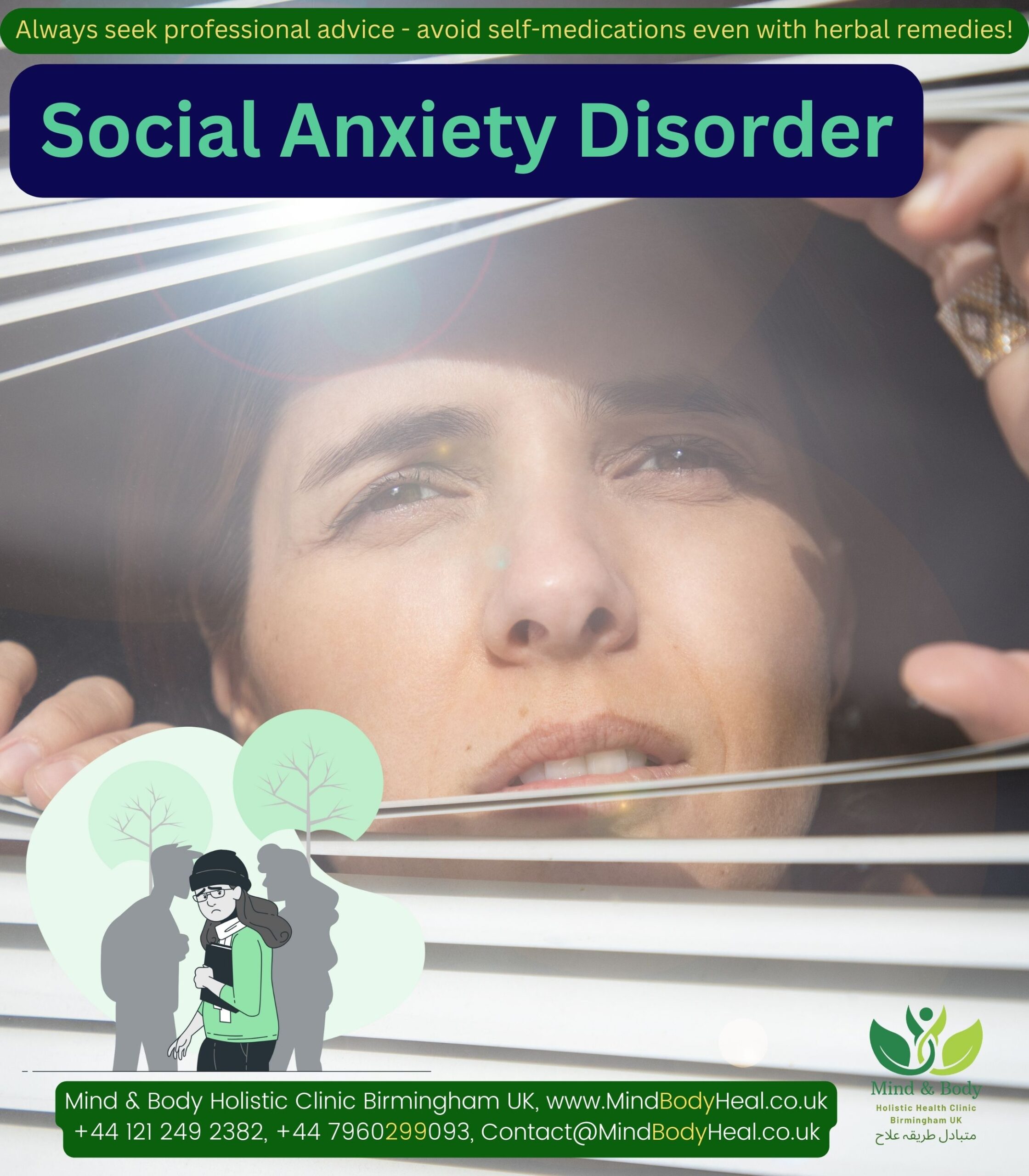
Social phobia or social anxiety disorder is a common mental health disorder that causes significant anxiety, panic attacks, self-consciousness and embarrassment to meet or interact with people even in everyday situations and that on-going fear or anxiety leads to escaping from many activities that can disrupt an individual’s life.
This condition not only can affect relationships but daily routines, work, school or other activities as well.
Social anxiety disorder where the victim experiences intense and ongoing fear of being judged, rejected, humiliated and / or watched suspiciously by others.
Comfort levels in social situations vary, depending on personality traits and life experiences. Some people are naturally reserved, and others are more outgoing.
It can affect people of any age but typically begins in the early to mid-teens.
Here are some of their Physical, physiological issues or signs & symptoms that may flare up if you’re facing a lot of changes, stress or demands in your life.
- Fast heartbeat
- Trembling
- Feeling very nervous
- Upset stomach or nausea
- Trouble catching breath
- Dizziness or light-headedness
- Muscle tension
- Socialising or avoiding meeting people
- Answering a question in front of people.
- Eating in front of people.
- Participating in a job interview.
- Meeting new or unfamiliar people.
- Performing in front of people.
- Taking or making phone calls.
- Using public restrooms.
- Asking for help in a restaurant, store or other public place.
- Returning items to a store
- Dating
- Avoiding public places where there are people.
- Excessive sweating, shaky voice, blushing or feeling your heart pound in certain situations.
- Less eye contact while interacting.
- Having a stiff body posture when you’re around other people.
- Being very self-conscious, humiliated, embarrassed or awkward in front of other people.
- Brain fog or f feeling that your mind has gone blank and not knowing what to say.
- Finding it scary and hard to be around, interact or talk to other people, especially strangers.
- Fear that others will notice that you look anxious
- Avoidance of speaking to people or situations where they may be the centre of attention
- Anticipatory anxiety that is feeling too stressed before seeing their doctor, attending a meeting, sitting in an exam or travelling in a plane etc.
- Analysis of self-performance or identification of mistakes in interactions after a social situation
- Expectation of the worst possible consequences during a social situation
- For children, anxiety may be shown by crying, having temper tantrums, clinging to parents or refusing to speak in social situations.
- Reluctant or shy to start conversations
- Entering a room in which people are already seated
Possible Causes or Risk factors
Like many other mental health conditions, social anxiety disorder can sometimes run in families.
- Stress and environmental factors.
- Brain structure.
- Negative experiences – after an unpleasant or embarrassing situation, such as family conflict, trauma or abuse.
- Children who experience teasing, bullying, rejection, ridicule or humiliation are more prone to such issues.
- People who are shy, bashful, timid, withdrawn or restrained when facing new situations.
- First timers typically in the teenagers by meeting new people, giving a speech in public or making an important work presentation etc.
- Physical appearance or condition that may draw attention of other people e.g., facial disfigurement, body shape or size – being obese or too skinny, stammering, stuttering or tremors due to certain neurological conditions.
Complications – This disorder can cause:
- Low self-esteem
- Negative self-talk
- Hypersensitivity to criticism
- Poor social skills
- Difficult social relationships
- Low academic and employment achievement
- Substance abuse or drug addictions
- Self-harm or suicidal attempts
Prevention
- Get help early.
- Set priorities in your life.
- Make sure that you spend time doing things you enjoy by utilising your time and energy in positive manner.
- Avoid unhealthy substance use such as alcohol, drugs, even caffeine or nicotine use can cause or worsen anxiety.
FREE Shipping included – Usually dispatched within 1 – 2 working days!
Are you concerned about your health or managing a recurring or chronic condition?
Our website provides informed guidance and initial supportive care for individuals who are finding it difficult to access their doctors or who have not experienced desired improvement with conventional options.
We help individuals explore a range of natural and holistic healing approaches to encourage balance and long-term wellness that may complement your healing journey.
We offer a ready-to-use complementary remedies kit designed to ease discomfort and support well-being, with clear instructions for each item.
The kit includes a personalised selection of remedies based on your signs, symptoms, and likely causative factors.
It may combine homeopathic medicines, herbal or daily supplements, a tailored diet plan, lifestyle guidance, practical tips, and topical applications where needed. It’s suitable if you value the healing potential of natural, holistic remedies.
Complementary remedies work best alongside standard medical treatments and can usually be taken safely with your regular medications.
Our homeopathic remedies follow Dr. Hahnemann’s traditional dilution and succussion methods and are prepared by a qualified naturopathic practitioner, supported by research, clinical experience, and observed outcomes in similar cases. Treatment duration can range from a few weeks to several months, depending on severity and chronicity. Outcomes vary with individual factors and case complexity.
If you prefer lactose pills instead of sucrose globules, let us know. Please also provide the patient’s age so we can supply appropriately sized pills. You can simply send this via WhatsApp at 07960 299 093.
These remedies may contain trace amounts of natural plant, mineral, or animal substances, preserved in medical-grade alcohol. Inform us of any allergies or dietary restrictions before purchase.
You may contact us before starting or book a detailed consultation (in person or via teleconsultation) with one of our experienced naturopath for your detailed assessment or personalized guidance.
Natural remedies can affect the body and may not suit everyone. At the start of treatment, some patients—especially with mental health or skin issues—may experience a temporary increase in symptoms. This may represent medicinal aggravation, indicating the body is responding, though symptoms may not be connected and simply coincidental. If they persist, contact us for support.
Why some patients choose natural, complementary or holistic remedies:
• Symptomatic relief and improved well-being
• Gentle options with fewer side effects
• Whole-person focus, addressing physical, emotional, and lifestyle factors
• Root-cause and preventive emphasis
• Encouragement of active self-care
• Support alongside conventional treatment
• Personalised and accessible care
Precautions:
• Inform your healthcare provider about any complementary therapies
• Some herbs or supplements may interact with conventional medications
• Do not replace conventional treatment for serious, chronic, or terminal conditions
These complementary remedy kits are provided for your own discretion and personal responsibility. Use them mindfully and avoid self-medicating in sensitive situations.
If you are looking for a specific remedy / kit not listed on our site or a customized formulation, contact us—our range is extensive and can be tailored to your physical and mental symptoms and causative factors.
Disclaimer:
Natural remedies—including homeopathic remedies, herbal supplements, and aromatherapy products—are generally safe for most people, including children and older adults. Still, consult your GP or healthcare provider before use, especially if pregnant, breastfeeding, or managing chronic or serious conditions.
- Our remedies support general wellness and are not a substitute for medical advice.
- Review product details and make informed decisions before purchasing, particularly for ongoing or serious concerns.
- We provide general guidance only; detailed personalised consultations are not available through this platform.
- These remedies are intended for individuals able to follow instructions independently.
- Our support focuses on product use and general information; repeated or highly detailed personal queries may not receive individual responses.
- If you need frequent reassurance or highly tailored advice, please consult a qualified naturopath or healthcare provider before purchasing.
Due to strict UK regulations on the sale of medicinal products, we cannot give specific advice, without a face-to-face consultation.