Understanding Underweight, Emaciation, and Severe Malnutrition
Maintaining a healthy body weight is important for overall wellbeing, immunity, energy production, hormone balance, and organ function. While much public attention is given to overweight and obesity, being underweight can also carry significant health risks—especially when linked to malnutrition, chronic disease, or poor nutrient absorption.
What Does “Underweight” Mean?
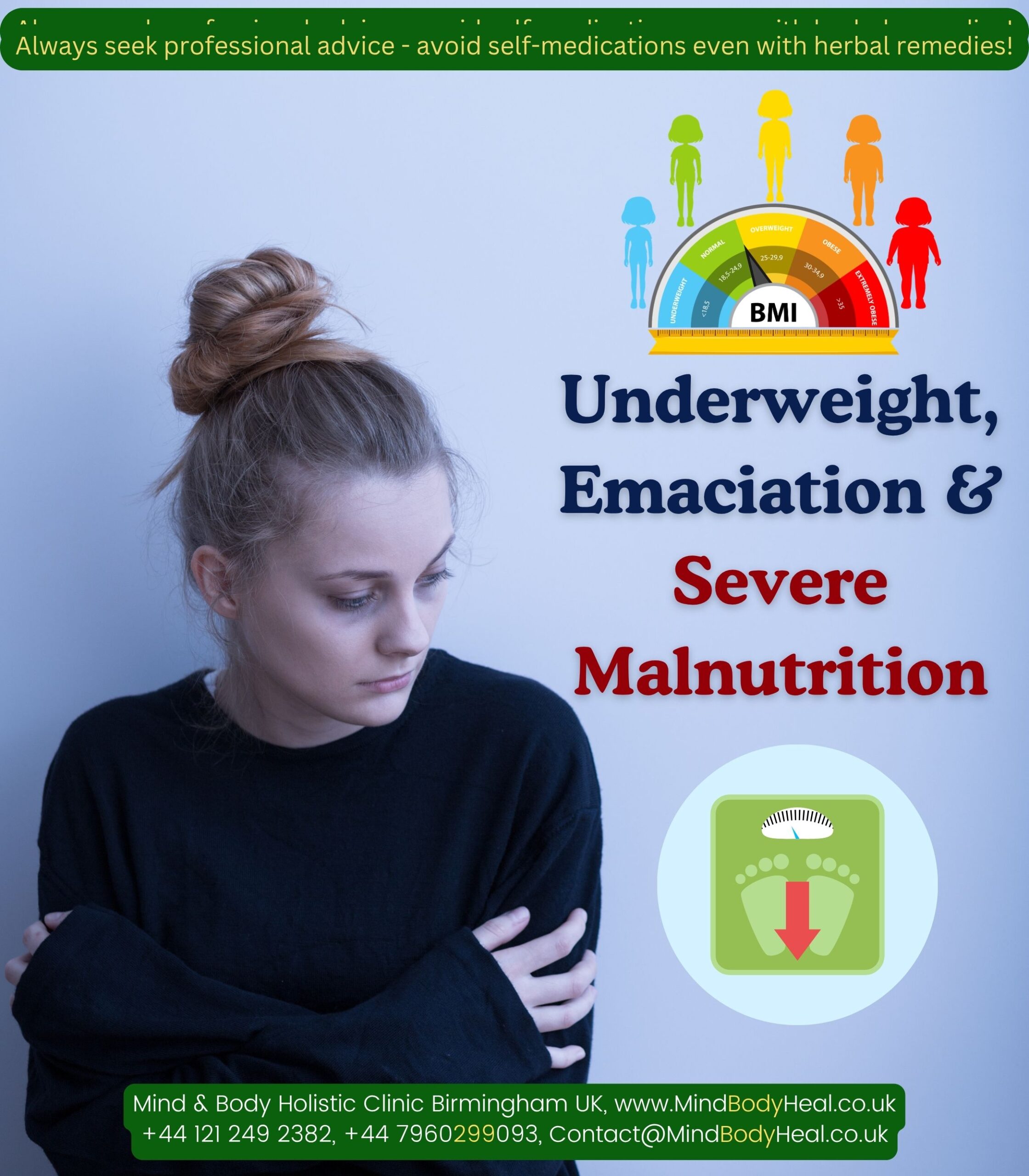
Underweight is medically defined as having a Body Mass Index (BMI) below 18.5, according to the standards of the World Health Organization (WHO).
However, body size alone does not always indicate poor health. Some individuals are naturally slim due to genetics or high metabolism and may remain healthy with no nutritional deficiencies. In other cases, being underweight may result from inadequate nutrition, illness, digestive disorders, or mental health conditions.
Common non-medical descriptions such as “too skinny,” “frail,” or “bony” are often used casually, but these do not necessarily reflect a medical diagnosis.
Related Conditions Associated with Severe Weight Loss
- Emaciation refers to an extreme degree of weight loss involving severe depletion of body fat and muscle mass, resulting in a visibly wasted or skeletal appearance.
It may develop due to:
- Prolonged starvation or food deprivation
- Severe malabsorption disorders
- Advanced chronic disease
- Severe eating disorders
Common features include:
- Extreme thinness
- Muscle wasting
- Weakness and fatigue
- Prominent bones and sunken facial appearance
- Marasmus is a severe form of protein-energy malnutrition caused by prolonged deficiency of calories and all major macronutrients, including carbohydrates, proteins, and fats.
It is most commonly seen in:
- Infants and young children
- Regions affected by famine, food insecurity, or neglect
Typical signs include:
- Severe wasting and weight loss
- Loss of muscle and fat stores
- Stunted growth
- Dry, thin skin
- Irritability or lethargy
- Absence of swelling (edema)
- Kwashiorkor is another severe malnutrition disorder primarily caused by inadequate protein intake, even when calorie intake may be relatively preserved.
It differs from marasmus because it commonly presents with:
- Swelling (edema), especially in legs, face, or abdomen
- Enlarged or swollen belly
- Fatty liver changes
- Skin and hair changes
- Apathy or reduced responsiveness
Kwashiorkor requires urgent medical attention.
- Cachexia is a complex metabolic wasting syndrome associated with serious chronic illness.
It is commonly linked to conditions such as:
- Cancer
- HIV/AIDS
- Tuberculosis (TB)
- Advanced heart failure
- Chronic kidney disease
- Chronic lung disease
Features include:
- Unintentional weight loss
- Progressive muscle wasting
- Loss of appetite
- Weakness and fatigue
- Inflammatory metabolic changes
Unlike simple undernutrition, cachexia is not usually reversed by food alone and often requires management of the underlying disease.
Common Causes of Being Underweight
- Inadequate Nutritional Intake
Not consuming enough calories or nutrients can result from:
- Poverty or food insecurity
- Famine or limited food access
- Neglect
- Restrictive dieting
- Eating disorders such as anorexia nervosa
- Inadequate infant feeding or poor weaning practices
- Malabsorption Disorders
Some people eat enough food but cannot absorb nutrients effectively.
Examples include:
- Celiac disease
- Crohn’s disease
- Chronic pancreatitis or pancreatic insufficiency
- Parasitic infections
- Chronic diarrhea syndromes
- Increased Metabolic Demand
Certain conditions cause the body to burn more calories than usual.
Examples include:
- Hyperthyroidism
- Chronic infections (such as TB or HIV)
- Cancer
- Prolonged fever or infection recovery
- Mental Health and Psychological Factors
Psychological health can strongly influence weight and nutrition.
Possible contributors include:
- Depression
- Anxiety
- Body dysmorphic disorder
- Eating disorders
- Stress-related appetite suppression
- Other Contributing Factors
- Substance misuse (including alcohol or drug dependency)
- Medication side effects causing nausea or reduced appetite
- Chronic pain conditions
- Developmental disabilities or feeding difficulties
- Social isolation or neglect in older adults
Risk Factors for Underweight and Malnutrition
Some individuals are more vulnerable to becoming underweight, including:
- Infants and young children
- Older adults, especially those living alone
- Premature babies or low birth weight infants
- People with chronic illness
- Individuals with poor access to healthcare
- Those experiencing poverty or food insecurity
- People with substance dependence
Chronic conditions commonly associated with weight loss include:
- Cancer
- Tuberculosis
- HIV/AIDS
- Chronic obstructive pulmonary disease (COPD)
- Gastrointestinal disorders
Common Signs and Symptoms of Being Underweight
Physical Signs
- Visible ribs, spine, or prominent bones
- Thin arms and legs
- Sunken eyes or hollow cheeks
- Dry skin
- Brittle nails
- Hair thinning or hair loss
- Reduced muscle mass
General Symptoms
- Fatigue or low energy
- Dizziness or light-headedness
- Feeling cold easily
- Poor wound healing
- Frequent illness or infections
- Digestive disturbances (constipation or diarrhea)
Hormonal and Reproductive Effects
- Irregular or absent menstrual cycles (amenorrhea)
- Reduced fertility
- Hormonal imbalance
In Children
- Poor growth or weight gain
- Delayed development
- Learning difficulties
- Delayed puberty
Potential Complications if Severe Underweight is Left Untreated
Long-term or severe undernutrition can lead to serious complications, including:
- Weakened immune system and recurrent infections
- Osteoporosis and fragile bones
- Muscle weakness and frailty
- Electrolyte imbalance
- Heart rhythm disturbances
- Organ dysfunction (heart, kidneys, liver)
- Fertility problems
- Delayed physical and cognitive development in children
In severe untreated cases of malnutrition, especially marasmus, kwashiorkor, or advanced cachexia, the condition can become life-threatening.
When to Seek Medical Advice
Medical assessment is recommended if someone experiences:
- Rapid or unexplained weight loss
- Persistent poor appetite
- Chronic diarrhea, vomiting, or digestive symptoms
- Extreme fatigue or weakness
- Recurrent infections
- Significant muscle wasting
A healthcare professional may investigate:
- Nutritional deficiencies
- Hormonal disorders
- Digestive disease
- Infection
- Mental health factors
- Chronic illness
Final Thoughts: Being underweight is not always a sign of illness, but unexplained or severe weight loss should never be ignored. Early identification of the underlying cause is important to prevent complications and improve recovery outcomes.
Healthy weight restoration is usually best approached through:
- Balanced nutrition
- Treating any underlying medical condition
- Addressing digestive or absorption issues
- Mental health support where needed
- Ongoing professional monitoring when appropriate
A personalised care plan is often the safest and most effective approach for long-term recovery and improved wellbeing.
FREE Shipping included – Usually dispatched within 1 – 2 working days!
Are you concerned about your health or managing a recurring or chronic condition?
Our website provides informed guidance and initial supportive care for individuals who are finding it difficult to access their doctors or who have not experienced desired improvement with conventional options.
We help individuals explore a range of natural and holistic healing approaches to encourage balance and long-term wellness that may complement your healing journey.
We offer a ready-to-use complementary remedies kit designed to ease discomfort and support well-being, with clear instructions for each item.
The kit includes a personalised selection of remedies based on your signs, symptoms, and likely causative factors.
It may combine homeopathic medicines, herbal or daily supplements, a tailored diet plan, lifestyle guidance, practical tips, and topical applications where needed. It’s suitable if you value the healing potential of natural, holistic remedies.
Complementary remedies work best alongside standard medical treatments and can usually be taken safely with your regular medications.
Our homeopathic remedies follow Dr. Hahnemann’s traditional dilution and succussion methods and are prepared by a qualified naturopathic practitioner, supported by research, clinical experience, and observed outcomes in similar cases. Treatment duration can range from a few weeks to several months, depending on severity and chronicity. Outcomes vary with individual factors and case complexity.
If you prefer lactose pills instead of sucrose globules, let us know. Please also provide the patient’s age so we can supply appropriately sized pills. You can simply send this via WhatsApp at 07960 299 093.
These remedies may contain trace amounts of natural plant, mineral, or animal substances, preserved in medical-grade alcohol. Inform us of any allergies or dietary restrictions before purchase.
You may contact us before starting or book a detailed consultation (in person or via teleconsultation) with one of our experienced naturopath for your detailed assessment or personalized guidance.
Natural remedies can affect the body and may not suit everyone. At the start of treatment, some patients—especially with mental health or skin issues—may experience a temporary increase in symptoms. This may represent medicinal aggravation, indicating the body is responding, though symptoms may not be connected and simply coincidental. If they persist, contact us for support.
Why some patients choose natural, complementary or holistic remedies:
• Symptomatic relief and improved well-being
• Gentle options with fewer side effects
• Whole-person focus, addressing physical, emotional, and lifestyle factors
• Root-cause and preventive emphasis
• Encouragement of active self-care
• Support alongside conventional treatment
• Personalised and accessible care
Precautions:
• Inform your healthcare provider about any complementary therapies
• Some herbs or supplements may interact with conventional medications
• Do not replace conventional treatment for serious, chronic, or terminal conditions
These complementary remedy kits are provided for your own discretion and personal responsibility. Use them mindfully and avoid self-medicating in sensitive situations.
If you are looking for a specific remedy / kit not listed on our site or a customized formulation, contact us—our range is extensive and can be tailored to your physical and mental symptoms and causative factors.
Disclaimer:
Natural remedies—including homeopathic remedies, herbal supplements, and aromatherapy products—are generally safe for most people, including children and older adults. Still, consult your GP or healthcare provider before use, especially if pregnant, breastfeeding, or managing chronic or serious conditions.
- Our remedies support general wellness and are not a substitute for medical advice.
- Review product details and make informed decisions before purchasing, particularly for ongoing or serious concerns.
- We provide general guidance only; detailed personalised consultations are not available through this platform.
- These remedies are intended for individuals able to follow instructions independently.
- Our support focuses on product use and general information; repeated or highly detailed personal queries may not receive individual responses.
- If you need frequent reassurance or highly tailored advice, please consult a qualified naturopath or healthcare provider before purchasing.
Due to strict UK regulations on the sale of medicinal products, we cannot give specific advice, without a face-to-face consultation.