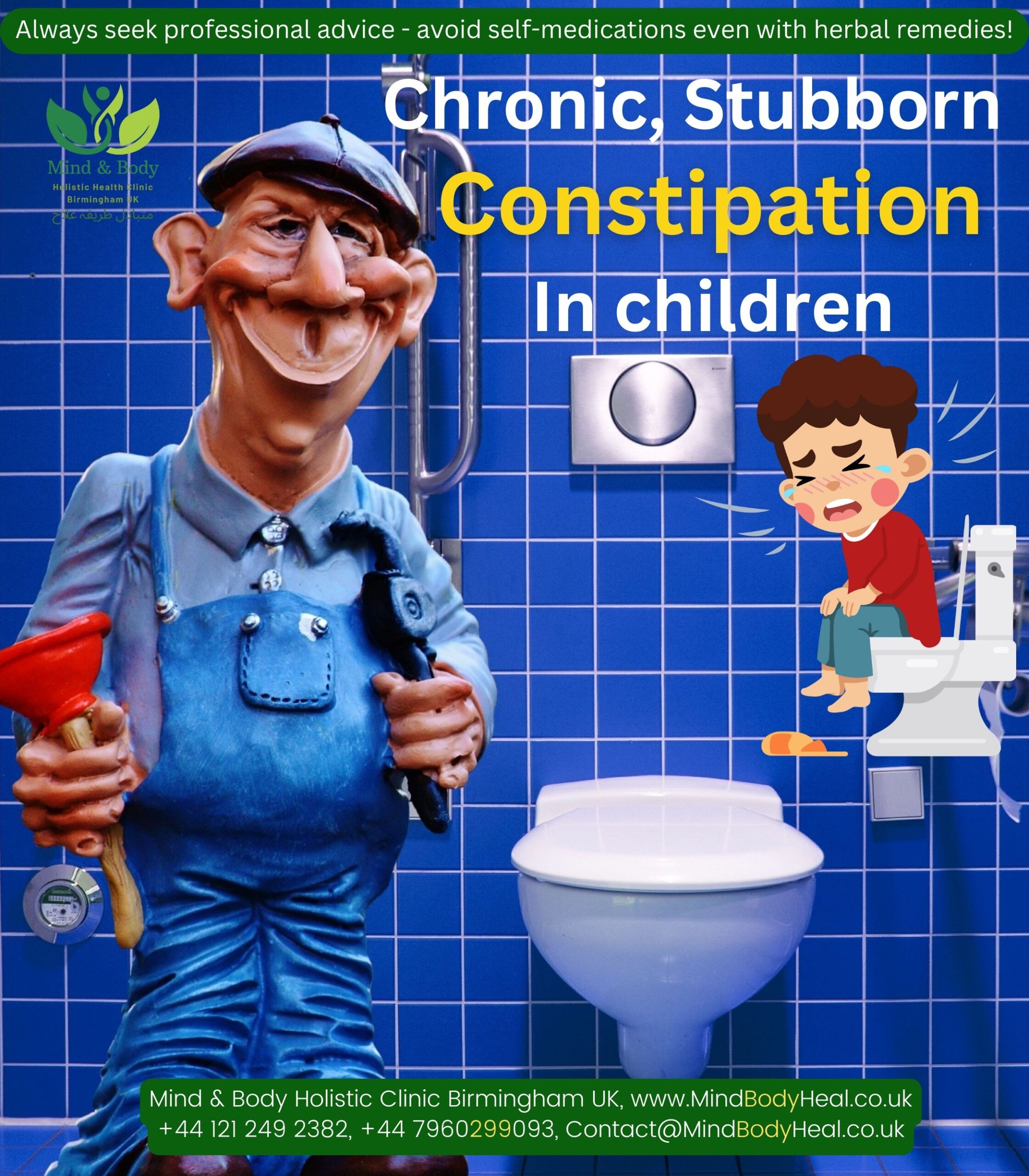
Constipation in children is a common problem.
A constipated child has infrequent bowel movements or hard, dry stools.
Signs of Constipation
- Infrequent stools that are difficult to pass
- Straining more than normal to have a bowel movement
- Stools formed like small, hard small pebbles, stools that are soft and mushy; stools that are wide and large
- Liquid stool (like diarrhoea) that may be passing around solid stool that stays inside
- Abdomen (belly) swollen with gas
- Painful cramps
- Less than three bowel movements a week
- Bowel movements that are hard, dry and difficult to pass
- Pain while having a bowel movement
- Stomach pain
- Traces of liquid or pasty stool in your child’s underwear — a sign that stool is backed up in the rectum
- Blood on the surface of hard stool
Causes & Risk factors
Constipation most commonly occurs when waste or stool moves too slowly through the digestive tract, causing the stool to become hard and dry.
Many factors can contribute to constipation in children, including:
- The most common cause is when a child will not pass a stool because they expect pain, so they delay toileting and the problem gets worse.
- Your child may ignore the urge to have a bowel movement because he or she is afraid of the toilet or doesn’t want to take a break from play. Some children withhold when they’re away from home because they’re uncomfortable using public toilets.
- Painful bowel movements caused by large, hard stools also may lead to withholding. If it hurts to poop, your child may try to avoid a repeat of the distressing experience.
- Toilet training issues. If you begin toilet training too soon, your child may rebel and hold in stool. If toilet training becomes a battle of wills, a voluntary decision to ignore the urge to poop can quickly become an involuntary habit that’s tough to change.
- Changes in diet. Not enough fiber-rich fruits and vegetables or fluid in your child’s diet may cause constipation. One of the more common times for children to become constipated is when they’re switching from an all-liquid diet to one that includes solid foods.
- Changes in routine. Any changes in your child’s routine — such as travel, hot weather or stress — can affect bowel function. Children are also more likely to experience constipation when they first start school outside of the home.
- Certain antidepressants and various other drugs can contribute to constipation.
- Cow’s milk allergy. An allergy to cow’s milk or consuming too many dairy products (cheese and cow’s milk) sometimes leads to constipation.
- Family history. Children who have family members who have experienced constipation are more likely to develop constipation. This may be due to shared genetic or environmental factors.
- Medical conditions. Rarely, constipation in children indicates an anatomic malformation, a metabolic or digestive system problem, or another underlying condition.
- Unfamiliar surroundings — Children may delay moving their bowels if they do not have a place where they feel comfortable having a bowel movement or if they are busy and ignore the need to use the toilet. This can happen when a child starts going to school and avoids having a bowel movement because they are worried about hygiene concerns or feel embarrassed to use the toilet at school.
Risk factors: Constipation in children is more likely to affect kids who:
- Are sedentary
- Don’t eat enough fibre
- Don’t drink enough fluids
- Take certain medications, including some antidepressants
- Have a medical condition affecting the anus or rectum
- Have a neurological disorder
Teach your child that it is a good idea to have a bowel movement when his or her body says it is time to do so, and reassure him or her that it is okay to use the bathroom at school. This type of training from early childhood may prevent development of constipation when your child starts school.
Further Complications
Constipation in children can be uncomfortable, and If it becomes chronic, however, complications may include:
- Painful breaks in the skin around the anus (anal fissures)
- Rectal prolapse, when the rectum comes out of the anus
- Stool withholding
- Avoiding bowel movements because of pain, which causes impacted stool to collect in the colon and rectum and leak out (encopresis)
Prevention & Treatment
To help prevent constipation in children:
- Offer your child high-fiber foods. A diet rich in fiber can help your child’s body form soft, bulky stool. Serve your child more high-fiber foods, such as fruits, vegetables, beans, and whole-grain cereals and breads. If your child isn’t used to a high-fiber diet, start by adding just several grams of fiber a day to prevent gas and bloating.
- Encourage your child to drink plenty of fluids. Water is often the best.
- Promote physical activity. Regular physical activity helps stimulate normal bowel function.
- Create a toilet routine. Regularly set aside time after meals for your child to use the toilet. If necessary, provide a footstool so that your child is comfortable sitting on the toilet and has enough leverage to release a stool.
- Remind your child to heed nature’s call. Some children get so wrapped up in play that they ignore the urge to have a bowel movement. If such delays occur often, they can contribute to constipation.
- Be supportive. Reward your child’s efforts, not results. Give children small rewards for trying to move their bowels. Possible rewards include stickers or a special book or game that’s only available after (or possibly during) toilet time. And don’t punish a child who has soiled his or her underwear.
- Review medications. If your child is taking a medication that causes constipation, ask his or her doctor about other options.
- If your baby is old enough to eat strained foods, you may give him fruits and vegetables.
- If your baby is not eating jar baby food yet, you may give 2 to 4 ounces of fruit juices (prune, pear, cherry, or apple) per day. If his stools become too loose, give less juice to your baby.
- If your baby is eating rice cereal, it may help to switch to oatmeal or barley cereal. Rice cereal can cause constipation in some children.
- Do not give your baby enemas, laxatives, or suppositories unless you are told to do so by the doctor.
FREE Shipping included – Usually dispatched within 1 – 2 working days!
Are you concerned about your health or managing a recurring or chronic condition?
Our website provides informed guidance and initial supportive care for individuals who are finding it difficult to access their doctors or who have not experienced desired improvement with conventional options.
We help individuals explore a range of natural and holistic healing approaches to encourage balance and long-term wellness that may complement your healing journey.
We offer a ready-to-use complementary remedies kit designed to ease discomfort and support well-being, with clear instructions for each item.
The kit includes a personalised selection of remedies based on your signs, symptoms, and likely causative factors.
It may combine homeopathic medicines, herbal or daily supplements, a tailored diet plan, lifestyle guidance, practical tips, and topical applications where needed. It’s suitable if you value the healing potential of natural, holistic remedies.
Complementary remedies work best alongside standard medical treatments and can usually be taken safely with your regular medications.
Our homeopathic remedies follow Dr. Hahnemann’s traditional dilution and succussion methods and are prepared by a qualified naturopathic practitioner, supported by research, clinical experience, and observed outcomes in similar cases. Treatment duration can range from a few weeks to several months, depending on severity and chronicity. Outcomes vary with individual factors and case complexity.
If you prefer lactose pills instead of sucrose globules, let us know. Please also provide the patient’s age so we can supply appropriately sized pills. You can simply send this via WhatsApp at 07960 299 093.
These remedies may contain trace amounts of natural plant, mineral, or animal substances, preserved in medical-grade alcohol. Inform us of any allergies or dietary restrictions before purchase.
You may contact us before starting or book a detailed consultation (in person or via teleconsultation) with one of our experienced naturopath for your detailed assessment or personalized guidance.
Natural remedies can affect the body and may not suit everyone. At the start of treatment, some patients—especially with mental health or skin issues—may experience a temporary increase in symptoms. This may represent medicinal aggravation, indicating the body is responding, though symptoms may not be connected and simply coincidental. If they persist, contact us for support.
Why some patients choose natural, complementary or holistic remedies:
• Symptomatic relief and improved well-being
• Gentle options with fewer side effects
• Whole-person focus, addressing physical, emotional, and lifestyle factors
• Root-cause and preventive emphasis
• Encouragement of active self-care
• Support alongside conventional treatment
• Personalised and accessible care
Precautions:
• Inform your healthcare provider about any complementary therapies
• Some herbs or supplements may interact with conventional medications
• Do not replace conventional treatment for serious, chronic, or terminal conditions
These complementary remedy kits are provided for your own discretion and personal responsibility. Use them mindfully and avoid self-medicating in sensitive situations.
If you are looking for a specific remedy / kit not listed on our site or a customized formulation, contact us—our range is extensive and can be tailored to your physical and mental symptoms and causative factors.
Disclaimer:
Natural remedies—including homeopathic remedies, herbal supplements, and aromatherapy products—are generally safe for most people, including children and older adults. Still, consult your GP or healthcare provider before use, especially if pregnant, breastfeeding, or managing chronic or serious conditions.
- Our remedies support general wellness and are not a substitute for medical advice.
- Review product details and make informed decisions before purchasing, particularly for ongoing or serious concerns.
- We provide general guidance only; detailed personalised consultations are not available through this platform.
- These remedies are intended for individuals able to follow instructions independently.
- Our support focuses on product use and general information; repeated or highly detailed personal queries may not receive individual responses.
- If you need frequent reassurance or highly tailored advice, please consult a qualified naturopath or healthcare provider before purchasing.
Due to strict UK regulations on the sale of medicinal products, we cannot give specific advice, without a face-to-face consultation.