Parkinson’s Disease also known as Paralysis Agitans
Parkinsonism is a condition that causes a combination of the movement abnormalities such as rigidity, tremor, slow movement, impaired speech, muscle stiffness or partial or complete loss of muscle movement known as hypokinesia etc.
It is a disorder of the nervous system that worsens over time. The nervous system is a network of nerve cells that controls many parts of the body, including movement.
Most common signs & symptoms.
Symptoms often begin on one side of the body, then affect both sides.
- Tremors – usually the first symptom that generally begins in one upper extremity, where the head may be involved, and such tremors disappear during sleep
- Or tremor in just one hand or sometimes a foot or the jaw.
- Shaking in the hands, arms, legs, jaw, or head, especially when resting.
- Shake less when you’re doing some sort of task or moving around.
- Rigidity that is somehow present to equal extent in opposing muscle groups, If a limb is passively moved, the rigidity gives way with a series of slight jerks.
- Difficulty in initiating movements or slowness in executing movements
- An inability to make adjustments to the posture of the body
- Infrequent blinking
- Impaired ocular convergence
- Slow monotonous speech, without typical speech patterns.
- Reduced swinging of arms while walking
- The whole body moves in one mass when the patient turns
- Physical movements are slower than normal, which can make it hard to do everyday tasks
- Short tottering steps, often rising on the toes and leaning forward
- One may rub their thumb and forefinger back and forth – known as a pill-rolling tremor.
- Postural disturbances
- Difficulty in rising from chair
- Difficulty in rolling over in bed
- Slurred speech
- Stopped posture
- Gait or balance disturbances
- The trunk appears stiff or freeze
- A decrease in sexual desire or performance
- Deep cramping sensations
- Excessive daytime sleepiness or fatigue
- Anxiety, depression or apathy
- Dementia with a prominent lack of motivation, or with hallucinations
- A serious or angry look on the face, even when are not in a bad mood
- Postural hypotension
- Tendency to fall
- Lack of energy while walking
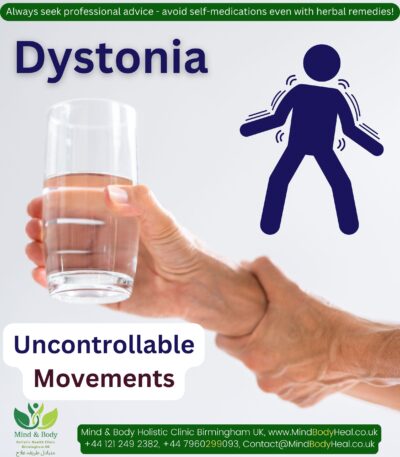
- Dyskinesia – a group of involuntary movements
- Swinging movements of limbs and trunk
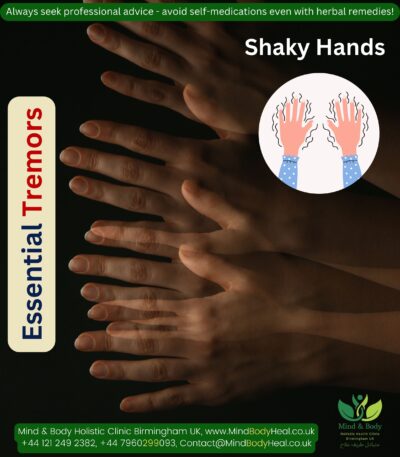
- Essential tremors
- Tremor worse with posture and action
- Tremors with no rigidity
- Aches and cramps in the muscles and joints, especially in the neck and back
- Drooling saliva
- Skin or vision changes
- Weight changes
- Constipation
- Nonmotor symptoms – may include acting out dreams, needing to urinate often, trouble smelling – have difficulty identifying certain odors or the difference between odors, problems with thinking and memory, and feeling very tired.
POSSIBLE CAUSES & RISK FACTORS
- Idiopathic with unknow causes
- Specific genetic changes are linked to Parkinson’s disease.
- In Parkinson’s disease, nerve cells in the brain – dopamine and norepinephrine called neurons slowly break down or die.
- The presence of Lewy bodies. Clumps of specific substances within brain cells are microscopic markers of Parkinson’s disease.
- Post-encephalitic Parkinsonism
- Lack of blood supply to the cerebrum
- Cerebral arteriosclerosis – thickening of the walls of the arteries due to aging or hypertension
- As a sequelae of various infectious process e.g. viral encephalitis
- Exposure to certain toxins or other environmental factors may increase the risk such as herbicides, pesticides, carbon monoxide, manganese, carbon disulphide
- Drugs- reserpine, phenothiazines, alpha methyldopa, butyrophenones, haloperidol
- Wilson’s disease
- Degeneration of the cerebellum
- Syphilitic mesencephalitis
- Very rare tumors of the brain stem
- The risk of Parkinson’s disease increases with age. Usually, it starts around age 60 or older.
- Men are more likely to develop Parkinson’s disease than are women.
Self-care, DO’S AND DONT’S
- Always carry an identity card with important telephone numbers Or take someone along while going out.
- Use a stick for support while walking.
- Take care of the cause of anxiety or stress.
- Avoid handling delicate articles.
- Inform banks or other necessary places about your disease and the subsequent change in your signature.
- Exercise or walk regularly as walking is known to increase brain activity.
- Eat nutritious food.
- Avoid alcohol and smoking.
Although Parkinson’s disease can’t be fully cured, some remedies may help symptoms get better.
FREE Shipping included – Usually dispatched within 1 – 2 working days!
Are you concerned about your health or managing a recurring or chronic condition?
Our website provides informed guidance and initial supportive care for individuals who are finding it difficult to access their doctors or who have not experienced desired improvement with conventional options.
We help individuals explore a range of natural and holistic healing approaches to encourage balance and long-term wellness that may complement your healing journey.
We offer a ready-to-use complementary remedies kit designed to ease discomfort and support well-being, with clear instructions for each item.
The kit includes a personalised selection of remedies based on your signs, symptoms, and likely causative factors.
It may combine homeopathic medicines, herbal or daily supplements, a tailored diet plan, lifestyle guidance, practical tips, and topical applications where needed. It’s suitable if you value the healing potential of natural, holistic remedies.
Complementary remedies work best alongside standard medical treatments and can usually be taken safely with your regular medications.
Our homeopathic remedies follow Dr. Hahnemann’s traditional dilution and succussion methods and are prepared by a qualified naturopathic practitioner, supported by research, clinical experience, and observed outcomes in similar cases. Treatment duration can range from a few weeks to several months, depending on severity and chronicity. Outcomes vary with individual factors and case complexity.
If you prefer lactose pills instead of sucrose globules, let us know. Please also provide the patient’s age so we can supply appropriately sized pills. You can simply send this via WhatsApp at 07960 299 093.
These remedies may contain trace amounts of natural plant, mineral, or animal substances, preserved in medical-grade alcohol. Inform us of any allergies or dietary restrictions before purchase.
You may contact us before starting or book a detailed consultation (in person or via teleconsultation) with one of our experienced naturopath for your detailed assessment or personalized guidance.
Natural remedies can affect the body and may not suit everyone. At the start of treatment, some patients—especially with mental health or skin issues—may experience a temporary increase in symptoms. This may represent medicinal aggravation, indicating the body is responding, though symptoms may not be connected and simply coincidental. If they persist, contact us for support.
Why some patients choose natural, complementary or holistic remedies:
• Symptomatic relief and improved well-being
• Gentle options with fewer side effects
• Whole-person focus, addressing physical, emotional, and lifestyle factors
• Root-cause and preventive emphasis
• Encouragement of active self-care
• Support alongside conventional treatment
• Personalised and accessible care
Precautions:
• Inform your healthcare provider about any complementary therapies
• Some herbs or supplements may interact with conventional medications
• Do not replace conventional treatment for serious, chronic, or terminal conditions
These complementary remedy kits are provided for your own discretion and personal responsibility. Use them mindfully and avoid self-medicating in sensitive situations.
If you are looking for a specific remedy / kit not listed on our site or a customized formulation, contact us—our range is extensive and can be tailored to your physical and mental symptoms and causative factors.
Disclaimer:
Natural remedies—including homeopathic remedies, herbal supplements, and aromatherapy products—are generally safe for most people, including children and older adults. Still, consult your GP or healthcare provider before use, especially if pregnant, breastfeeding, or managing chronic or serious conditions.
- Our remedies support general wellness and are not a substitute for medical advice.
- Review product details and make informed decisions before purchasing, particularly for ongoing or serious concerns.
- We provide general guidance only; detailed personalised consultations are not available through this platform.
- These remedies are intended for individuals able to follow instructions independently.
- Our support focuses on product use and general information; repeated or highly detailed personal queries may not receive individual responses.
- If you need frequent reassurance or highly tailored advice, please consult a qualified naturopath or healthcare provider before purchasing.
Due to strict UK regulations on the sale of medicinal products, we cannot give specific advice, without a face-to-face consultation.