25. ADHD – Suggested complimentary remedies

£28.00£76.00

Instock

Clear
Description

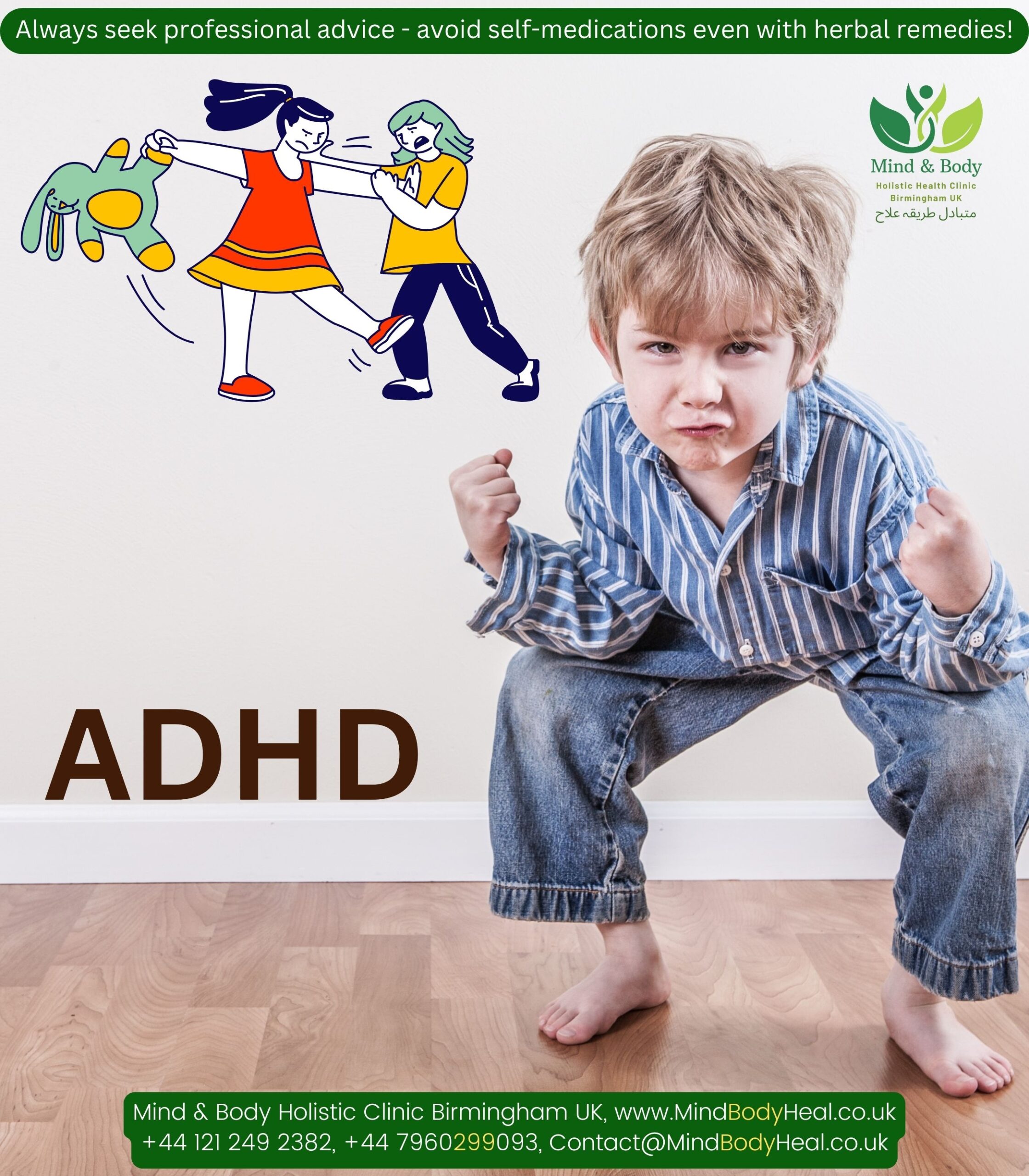
ADHD – attention deficit hyperactivity disorder; is a developmental neuropsychiatric or mental health disorder that affects millions of children as well as adults.  

The symptoms normally start before age 12 but can be noticeable in children as early as 3 years of age.

This condition occurs more often in males than in females, and behaviours can be different in boys and girls.

Some of the most noticeable signs and symptoms of ADHD are:

  • Inattention – difficulty paying or sustaining attention.
  • Hyperactivity – an excessive inclination to fidget and moving about.
  • Difficulty remaining seated or static in one place.
  • Impulsivity
  • Frequent daydreaming,
  • Difficulty following instructions.
  • Memory issues or forgetting things easily.
  • Problems organizing, completing tasks or activities.
  • Easily distracted.
  • Becoming bored easily
  • Talking excessively.
  • Incapable of concentrating at school.
  • Tend to have more accidents and injuries.
  • Trouble interacting with others etc.

Adults symptoms in ADHD may include:

  • Unstable relationships.
  • Poor work or performance.
  • Trouble multitasking
  • Hot tempered
  • Trouble coping with stress and
  • Low self-esteem etc.

Possible causes and Risk factors of ADHD.

The exact cause is still unknow and not clear!

  • But there are few factors found to contribute to its development.
  • Genetics or blood relatives, such as a parent or sibling, with ADHD or another mental disorder
  • Central nervous system problems
  • Premature birth
  • Exposure to environmental toxins such as metal pipes or lead.
  • Maternal drug, alcohol use, smoking or exposure to environmental poisons during pregnancy.

Helpful Tips & Prevention for ADHD

  • Pregnant ladies should avoid anything that could harm foetal development such as drinking alcohol, using recreational drugs or smoking cigarettes.
  • Children should be protected from exposure to pollutants and toxins, including cigarette smoke etc.
  • Use organizers for homework and other tasks.
  • Help your child develop a habit of writing down important notes for the day.
  • Spend quality time with your child and show lots of love and affection.
  • Look for new ways to improve your child’s self-esteem and sense of discipline.
  • Use simple words and demonstrate with your hands when giving your child directions.
  • Always make eye contact with your child.
  • Make sure your child gets proper rest and sleep as being overtired can make symptoms worse.
  • Make sure your child does not spend too much time on cell phones, computer games and watching TV.
  • Remain patient and calm when dealing with your child.
  • Give praise or small rewards when your child follows the rules.
  • Regular physical exercise specially in open, green spaces is beneficial against stress, anxiety, depression, poor impulse control and compulsive behaviour.
  • Bike riding, jogging, swimming, swinging, and kicking a ball are some exercises that most children enjoy.
  • Martial arts, gymnastics and ice skating etc., are few other good options.


FREE Shipping included – Usually dispatched within 1 – 2 working days!

Are you concerned about your health or managing a recurring or chronic condition?

Our website provides informed guidance and initial supportive care for individuals who are finding it difficult to access their doctors or who have not experienced desired improvement with conventional options.

We help individuals explore a range of natural and holistic healing approaches to encourage balance and long-term wellness that may complement your healing journey.

We offer a ready-to-use complementary remedies kit designed to ease discomfort and support well-being, with clear instructions for each item.

The kit includes a personalised selection of remedies based on your signs, symptoms, and likely causative factors.

It may combine homeopathic medicines, herbal or daily supplements, a tailored diet plan, lifestyle guidance, practical tips, and topical applications where needed. It’s suitable if you value the healing potential of natural, holistic remedies.

Complementary remedies work best alongside standard medical treatments and can usually be taken safely with your regular medications.

Our homeopathic remedies follow Dr. Hahnemann’s traditional dilution and succussion methods and are prepared by a qualified naturopathic practitioner, supported by research, clinical experience, and observed outcomes in similar cases. Treatment duration can range from a few weeks to several months, depending on severity and chronicity. Outcomes vary with individual factors and case complexity.

If you prefer lactose pills instead of sucrose globules, let us know. Please also provide the patient’s age so we can supply appropriately sized pills. You can simply send this via WhatsApp at 07960 299 093.

These remedies may contain trace amounts of natural plant, mineral, or animal substances, preserved in medical-grade alcohol. Inform us of any allergies or dietary restrictions before purchase.

You may contact us before starting or book a detailed consultation (in person or via teleconsultation) with one of our experienced naturopath for your detailed assessment or personalized guidance.

Natural remedies can affect the body and may not suit everyone. At the start of treatment, some patients—especially with mental health or skin issues—may experience a temporary increase in symptoms. This may represent medicinal aggravation, indicating the body is responding, though symptoms may not be connected and simply coincidental. If they persist, contact us for support.

Why some patients choose natural, complementary or holistic remedies:
• Symptomatic relief and improved well-being
• Gentle options with fewer side effects
• Whole-person focus, addressing physical, emotional, and lifestyle factors
• Root-cause and preventive emphasis
• Encouragement of active self-care
• Support alongside conventional treatment
• Personalised and accessible care

Precautions:
• Inform your healthcare provider about any complementary therapies
• Some herbs or supplements may interact with conventional medications
• Do not replace conventional treatment for serious, chronic, or terminal conditions

These complementary remedy kits are provided for your own discretion and personal responsibility. Use them mindfully and avoid self-medicating in sensitive situations.

If you are looking for a specific remedy / kit not listed on our site or a customized formulation, contact us—our range is extensive and can be tailored to your physical and mental symptoms and causative factors.

Disclaimer:
Natural remedies—including homeopathic remedies, herbal supplements, and aromatherapy products—are generally safe for most people, including children and older adults. Still, consult your GP or healthcare provider before use, especially if pregnant, breastfeeding, or managing chronic or serious conditions.

  • Our remedies support general wellness and are not a substitute for medical advice.
  • Review product details and make informed decisions before purchasing, particularly for ongoing or serious concerns.
  • We provide general guidance only; detailed personalised consultations are not available through this platform.
  • These remedies are intended for individuals able to follow instructions independently.
  • Our support focuses on product use and general information; repeated or highly detailed personal queries may not receive individual responses.
  • If you need frequent reassurance or highly tailored advice, please consult a qualified naturopath or healthcare provider before purchasing.


Due to strict UK regulations on the sale of medicinal products, we cannot give specific advice, without a face-to-face consultation.

Additional information
Age wise

10 years & above, 1 to 10 years

Quantity

One month supply, Two months supply, Three months supply

Peculiar symptoms 1

Not responding to their names, Not engaging in basic interactive games, Finding it hard to understand, Very anxious about socializing, Finding it hard to make friends, Preferring to be on your own, Seeming blunt or rude, Not interested in anything, No or very limited eyes contact, Slow in talking or reading, Only uses short, incomplete sentences., Slow in walking, Slow in following instructions, Having the same routine every day, Getting very irritated if distracted, Getting too close to other people, Getting very upset if someone touches, Keen interest in certain activities, Quieter, may hide feelings, Difficulty maintaining close friendships, Unaware of/disinterested in what is going on around them., Talks excessively about one or two topics., Speech is abnormally loud, Keep repeating things e.g., washing hands, Destructive – throw away or break toys etc, Very shy or bashful, Keep laughing, PICA – eat indigestible things, In constant move – never sits in one place, Teeth grinding, Saliva Drooling, Hitting or biting others, Vulgar / nude, Disturbed sleep, Very Stubborn, Demand things and then throw them away, Always angry, hot tempered, bad mood, quarrelsome, Never happy / unpleased, Self- talking, Lack of confidence, Mentally sluggish, low concentration – poor memory, Frequent daydreaming, Problems organizing, completing tasks or activities., Easily distracted., Becoming bored easily, Talking excessively., Tend to have more injuries., Trouble interacting with others, Trouble coping with stress

Peculiar symptoms 2

Not responding to their names, Not engaging in basic interactive games, Finding it hard to understand, Very anxious about socializing, Finding it hard to make friends, Preferring to be on your own, Seeming blunt or rude, Not interested in anything, No or very limited eyes contact, Slow in talking or reading, Only uses short, incomplete sentences., Slow in walking, Slow in following instructions, Having the same routine every day, Getting very irritated if distracted, Getting too close to other people, Getting very upset if someone touches, Keen interest in certain activities, Quieter, may hide feelings, Difficulty maintaining close friendships, Unaware of/disinterested in what is going on around them., Talks excessively about one or two topics., Speech is abnormally loud, Keep repeating things e.g., washing hands, Destructive – throw away or break toys etc, Very shy or bashful, Keep laughing, PICA – eat indigestible things, In constant move – never sits in one place, Teeth grinding, Saliva Drooling, Hitting or biting others, Vulgar / nude, Disturbed sleep, Very Stubborn, Demand things and then throw them away, Always angry, hot tempered, bad mood, quarrelsome, Never happy / unpleased, Self- talking, Lack of confidence, Mentally sluggish, low concentration – poor memory, Frequent daydreaming, Problems organizing, completing tasks or activities., Easily distracted., Becoming bored easily, Talking excessively., Tend to have more injuries., Trouble interacting with others, Trouble coping with stress

Peculiar symptoms 3

Not responding to their names, Not engaging in basic interactive games, Finding it hard to understand, Very anxious about socializing, Finding it hard to make friends, Preferring to be on your own, Seeming blunt or rude, Not interested in anything, No or very limited eyes contact, Slow in talking or reading, Only uses short, incomplete sentences., Slow in walking, Slow in following instructions, Having the same routine every day, Getting very irritated if distracted, Getting too close to other people, Getting very upset if someone touches, Keen interest in certain activities, Quieter, may hide feelings, Difficulty maintaining close friendships, Unaware of/disinterested in what is going on around them., Talks excessively about one or two topics., Speech is abnormally loud, Keep repeating things e.g., washing hands, Destructive – throw away or break toys etc, Very shy or bashful, Keep laughing, PICA – eat indigestible things, In constant move – never sits in one place, Teeth grinding, Saliva Drooling, Hitting or biting others, Vulgar / nude, Disturbed sleep, Very Stubborn, Demand things and then throw them away, Always angry, hot tempered, bad mood, quarrelsome, Never happy / unpleased, Self- talking, Lack of confidence, Mentally sluggish, low concentration – poor memory, Frequent daydreaming, Problems organizing, completing tasks or activities., Easily distracted., Becoming bored easily, Talking excessively., Tend to have more injuries., Trouble interacting with others, Trouble coping with stress

Peculiar symptoms 4

Not responding to their names, Not engaging in basic interactive games, Finding it hard to understand, Very anxious about socializing, Finding it hard to make friends, Preferring to be on your own, Seeming blunt or rude, Not interested in anything, No or very limited eyes contact, Slow in talking or reading, Only uses short, incomplete sentences., Slow in walking, Slow in following instructions, Having the same routine every day, Getting very irritated if distracted, Getting too close to other people, Getting very upset if someone touches, Keen interest in certain activities, Quieter, may hide feelings, Difficulty maintaining close friendships, Unaware of/disinterested in what is going on around them., Talks excessively about one or two topics., Speech is abnormally loud, Keep repeating things e.g., washing hands, Destructive – throw away or break toys etc, Very shy or bashful, Keep laughing, PICA – eat indigestible things, In constant move – never sits in one place, Teeth grinding, Saliva Drooling, Hitting or biting others, Vulgar / nude, Disturbed sleep, Very Stubborn, Demand things and then throw them away, Always angry, hot tempered, bad mood, quarrelsome, Never happy / unpleased, Self- talking, Lack of confidence, Mentally sluggish, low concentration – poor memory, Frequent daydreaming, Problems organizing, completing tasks or activities., Easily distracted., Becoming bored easily, Talking excessively., Tend to have more injuries., Trouble interacting with others, Trouble coping with stress

Peculiar symptoms 5

Not responding to their names, Not engaging in basic interactive games, Finding it hard to understand, Very anxious about socializing, Finding it hard to make friends, Preferring to be on your own, Seeming blunt or rude, Not interested in anything, No or very limited eyes contact, Slow in talking or reading, Only uses short, incomplete sentences., Slow in walking, Slow in following instructions, Having the same routine every day, Getting very irritated if distracted, Getting too close to other people, Getting very upset if someone touches, Keen interest in certain activities, Quieter, may hide feelings, Difficulty maintaining close friendships, Unaware of/disinterested in what is going on around them., Talks excessively about one or two topics., Speech is abnormally loud, Keep repeating things e.g., washing hands, Destructive – throw away or break toys etc, Very shy or bashful, Keep laughing, PICA – eat indigestible things, In constant move – never sits in one place, Teeth grinding, Saliva Drooling, Hitting or biting others, Vulgar / nude, Disturbed sleep, Very Stubborn, Demand things and then throw them away, Always angry, hot tempered, bad mood, quarrelsome, Never happy / unpleased, Self- talking, Lack of confidence, Mentally sluggish, low concentration – poor memory, Frequent daydreaming, Problems organizing, completing tasks or activities., Easily distracted., Becoming bored easily, Talking excessively., Tend to have more injuries., Trouble interacting with others, Trouble coping with stress